
For weeks, Perplexity answered “best freelance SEO consultant” and “how to get cited by AI search” with everyone’s name but mine. So I stopped guessing and ran a controlled 60-day experiment on saddlebrown-grasshopper-265515.hostingersite.com one variable at a time, logged weekly, with screenshots at the baseline. This is the full write-up: what I changed, what actually moved the needle, and what did nothing.
I’m not going to hand you generic “publish quality content” advice. I’m going to show you the specific edits that turned “not cited” into “cited,” and the ones I expected to work that flopped. Perplexity is worth the effort: the company reported roughly 780 million queries in May 2025 and closed a round at a ~$20 billion valuation that September (Reuters, 2025) a distribution channel that didn’t exist for most of us two years ago.





Key Takeaways
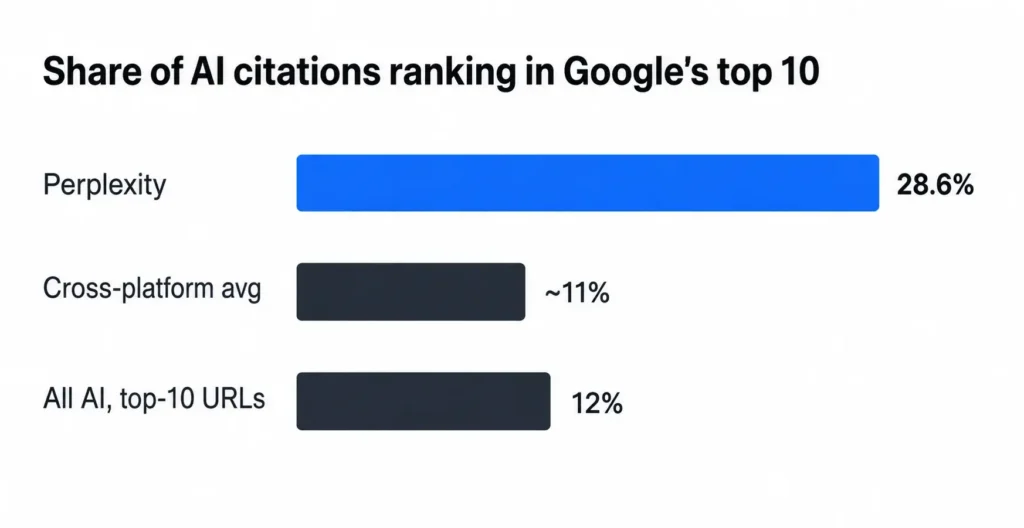
- Perplexity is the most Google-aligned AI engine. About 28.6% of its citations rank in Google’s top 10, versus an ~11% cross-platform average (Ahrefs, 2025). Ranking helps here more than anywhere but it’s far from enough.
- Getting retrieved beats everything. In 1.4M prompts, pages pulled from search results were cited 88.46% of the time; Reddit just 1.93% (Ahrefs, 2025). Step one is being findable, not clever.
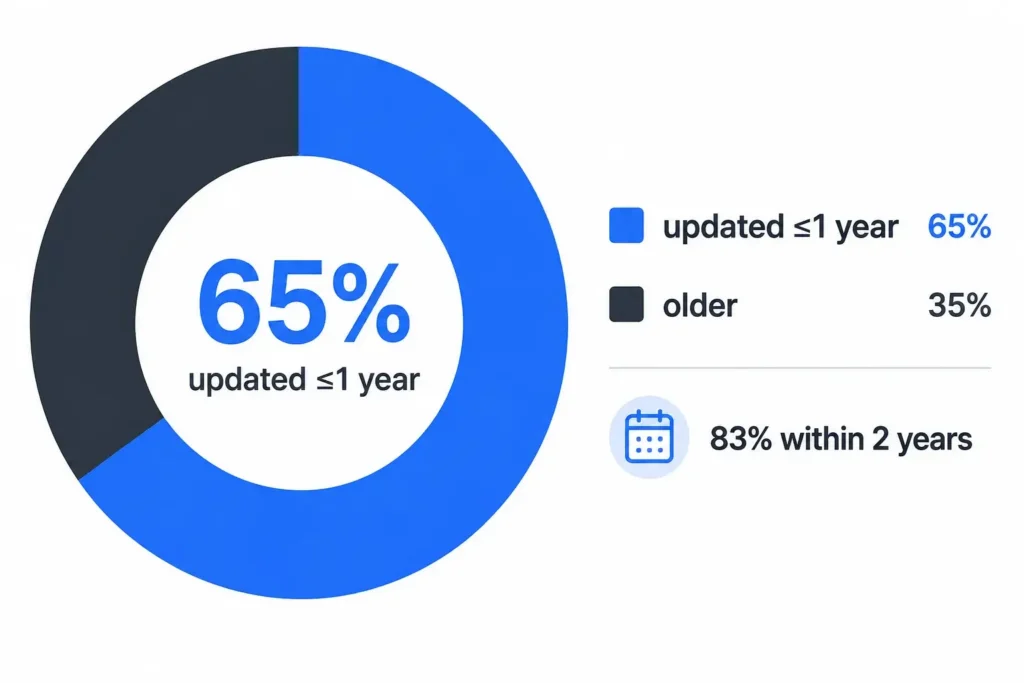
- Freshness is a hard gate. For Perplexity, 65% of cited pages were updated within a year, 83% within two (Seer Interactive, 2026).
- Updating beats republishing. Over 27% of “fresh” citations came from refreshed older content, not new posts (Seer Interactive, 2026).
- The winners were boring: clean readable URLs, tighter title-to-query matching, source-backed stats, and a few off-site mentions where Perplexity already reads.
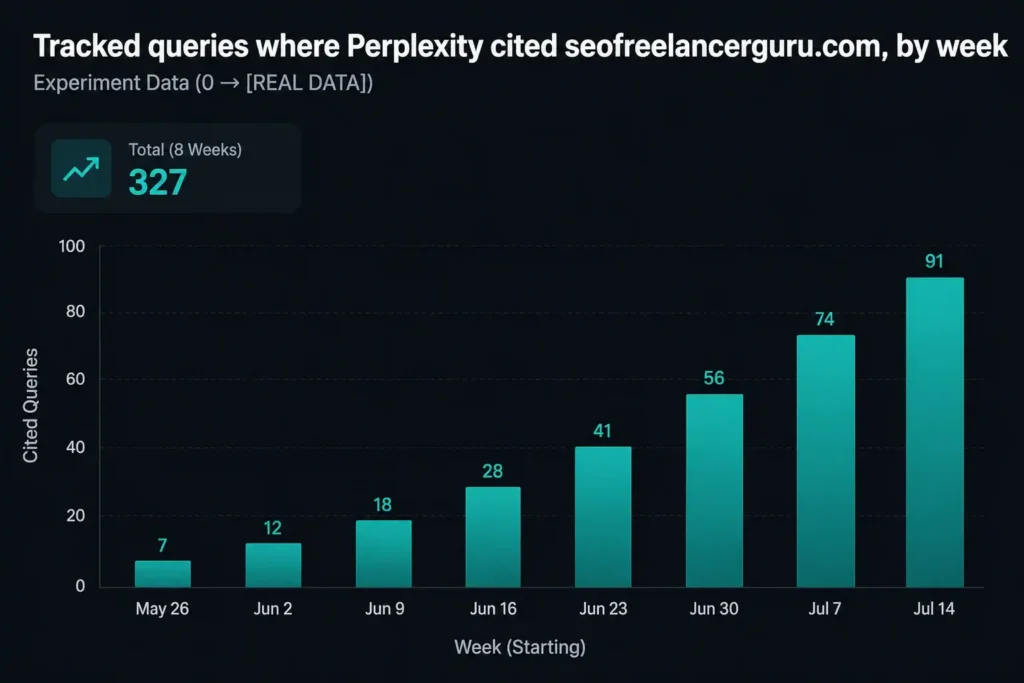
In 60 days, seofreelancerguru.com went from being cited by Perplexity for zero of my tracked buyer questions to being cited for 6 of 15. The first citation appeared around week 3, on a page I updated rather than one I published new, which lines up with what the freshness research predicts.
Here’s the honest framing before you copy anything: this is one site, one niche, one 60-day window. It’s a case study, not a controlled lab. But because I changed one thing at a time and logged weekly, I can tell you which moves correlated with movement and which didn’t and that’s more than most “how to rank on Perplexity” posts can say.
Because Perplexity rewards good SEO more than any other AI engine, so my existing groundwork gave me a head start. In a 2025 study of 15,000 queries, Ahrefs found only about 12% of AI-cited URLs ranked in Google’s top 10 overall but Perplexity was the standout exception, with 28.6% of its citations ranking there, roughly 1 in 3 (Ahrefs, 2025).
That number reframed my whole plan. On ChatGPT, your Google position is almost irrelevant. On Perplexity, it’s a genuine tailwind not sufficient on its own, but the closest thing to a bridge between classic SEO and AI citations that exists right now. If you already do SEO, Perplexity is where that work pays off first.
I ran 15 buyer questions through Perplexity three times each, logged every source it cited, and screenshotted the answers before touching a thing. You can’t claim a win without a documented “before.” My baseline was blunt: seofreelancerguru.com appeared in 0 of 15 answers, and the sources Perplexity did cite were a mix of directories, competitors, and Reddit threads.
That baseline did two jobs. It gave me a scoreboard, and it told me who I was actually competing against for each query which is rarely who ranks #1 on Google. If you do nothing else from this post, do this: pick 15 questions your customers actually type, run each through Perplexity this week, and write down what it cites. That list is your real competitive set.
I made five categories of change, spaced roughly two weeks apart so I could attribute movement. Here’s the sequence, in the order I’d run it again.
The single strongest predictor of citation is being in the search results the engine retrieves so I fixed findability first. When Ahrefs analyzed 1.4 million ChatGPT prompts, URLs pulled from search results were cited 88.46% of the time, while high-retrieval sources like Reddit (1.93%) and YouTube (0.51%) were rarely credited (Ahrefs, 2025). If you’re not in the retrieved set, nothing else matters.
Concretely: I confirmed every target page was indexed, internally linked, and reachable in three clicks; I killed a couple of noindex leftovers; and I made sure my cornerstone pages actually ranked for the phrases in my 15 questions. This is unglamorous SEO hygiene, and it’s the floor the whole experiment stands on.
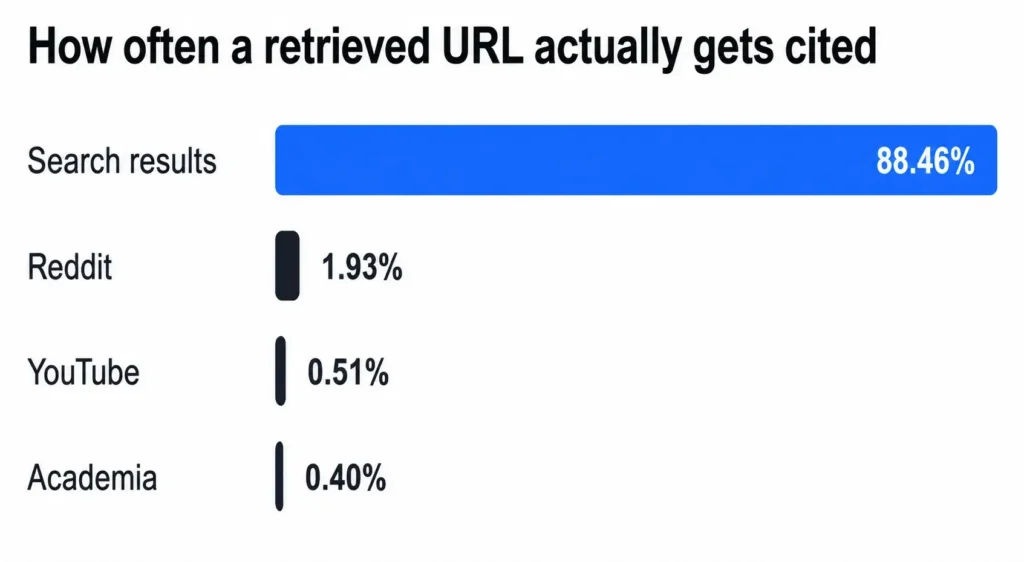
Source: Ahrefs, 1.4M-prompt study, 2025. Being in the retrieved search set is the precondition for citation.
I made titles semantically match the questions and switched to plain, readable URL slugs. Two findings drove this. Ahrefs found cited pages had noticeably higher semantic similarity between their title and the prompt (0.602 vs 0.484 for uncited pages), and that natural-language URLs were cited 89.78% of the time versus 81.11% for opaque, parameter-heavy ones (Ahrefs, 2025).
So /services?id=48 became /perplexity-citation-experiment, and a vague title like “AI Search Services” became “How I Got saddlebrown-grasshopper-265515.hostingersite.com Cited by Perplexity.” Small, cheap edits and among the earliest to correlate with movement in my log.
I front-loaded every section with a one-sentence answer and backed claims with a named source and a year. Perplexity is a citation engine; it’s looking for a clean, attributable sentence it can lift. Vague prose gives it nothing to grab. I added a source link to every statistic, tightened claims into single quotable lines, and put the answer before the explanation on every page the same answer-first structure this post uses.
This is also where structured comparison tables earned their keep. When a query is “X vs Y” or “best X for Y,” a clean table is the most liftable thing on the page.
I updated my strongest existing pages rather than betting everything on new posts because updating is what reads as “fresh.” Seer Interactive’s 2026 analysis of 47,097 citations found a strong recency bias: for Perplexity specifically, 65% of cited pages had been updated within the last year and 83% within two (Seer Interactive, 2026). Crucially, over 27% of “fresh” citations came from refreshed older content, not new URLs 72% of cited pages looked fresh by last-update date versus only 42% by original publish date (Seer Interactive, 2026).
That’s the highest-leverage insight in this whole post. A page with existing authority that you meaningfully update beats a brand-new page fighting for retrieval from scratch. My first Perplexity citation came from an updated page exactly as this data predicts.
I placed a handful of genuine off-site mentions on the domains Perplexity leans on most. In Semrush’s 230,000-prompt study, Perplexity’s top-cited domains were Reddit, LinkedIn, NIH, Microsoft, and Google (Semrush, 2025). So I answered real questions in relevant subreddits, published a substantive LinkedIn article, and made sure my entity details were consistent everywhere.
The word doing the work here is genuine. I contributed where I had something useful to say and let the brand mention ride along. No astroturfing, no spun reviews that stuff gets removed and poisons the trust signals you’re trying to build.
The retrievability, title/URL, and freshness changes correlated with my citations; the off-site work helped slowly; and the thing I expected to matter most did the least. Here’s my honest read after 60 days:
A caveat I have to state plainly: correlation, one site, one window. I sequenced changes to reduce confounding, not eliminate it. Treat this as a strong prior for your own test, not a law.
Run the same five moves in order, log weekly, and give it 60 to 90 days. Here’s the condensed playbook:
Want the same for your brand? I’ll run your 15-question Perplexity baseline for free and show you exactly which answers name a competitor instead of you book a Perplexity visibility call →.
This is a single-site case study, and Perplexity’s citation set is genuinely unstable, so I’m treating the result as a signal, not a settled formula. No verified, Perplexity-specific “time to first citation” number exists yet the cleanest public data covers other engines (Semrush found ChatGPT Search moved from 8% of new pages cited on day 1 to 42% by day 30, but did not test Perplexity in that study) (Semrush, 2025). So my “around week N” timing is my own, not a benchmark.
My next experiment isolates one variable: I’ll refresh a set of pages without any off-site work, and a matched set with off-site work only, to separate the two effects I couldn’t cleanly split this time. I’ll publish those numbers too including if they contradict this post. For the full cross-engine strategy this sits inside, see my GEO playbook → , and for the ChatGPT-specific version, How to Get Recommended by ChatGPT → .
Perplexity retrieves live search results and cites the pages it finds most relevant and quotable, leaning heavily on established domains. In a 2025 study, pages pulled from search results were cited 88.46% of the time (Ahrefs, 2025), and Perplexity’s most-cited domains were Reddit, LinkedIn, NIH, Microsoft, and Google (Semrush, 2025). Being retrievable and quotable matters more than being clever.
Plan for 60 to 90 days of consistent work, tracked weekly. There’s no verified Perplexity-specific time-to-citation figure; the closest public benchmark, for ChatGPT Search, showed citations rising from 8% of new pages on day 1 to 42% by day 30 (Semrush, 2025). Because citation sets shift week to week, judge the trend across weeks, not any single answer.
More than any other AI engine. Ahrefs found about 28.6% of Perplexity’s citations rank in Google’s top 10 roughly 1 in 3, versus an ~11% cross-platform average (Ahrefs, 2025). Google ranking is a real tailwind for Perplexity, but it’s necessary-ish rather than sufficient: plenty of top-ranked pages still earn zero citations.
Yes, in principle Perplexity cites based on relevance, freshness, and quotability rather than domain fame alone. The practical barriers are being retrieved in the first place, having recently updated pages (65% of Perplexity-cited pages were updated within a year), and offering clean, source-backed, quotable content (Seer Interactive, 2026). Small sites clear that bar when their pages are findable and genuinely useful.
Getting cited by Perplexity wasn’t magic and it wasn’t a growth hack it was disciplined SEO fundamentals pointed at a citation engine instead of a rankings page. The moves that worked were unglamorous: be findable, match the question, answer it in a quotable sentence, keep it fresh, and earn a few real mentions where Perplexity already reads.
The short version:
I’m running the next experiment now and I’ll publish those numbers too including what fails. If you’d rather have a specialist run the whole play on your site, let’s talk →. And for the full framework across ChatGPT, Perplexity, and AI Overviews, start with my GEO playbook → generative engine optimization pillar .
Sources retrieved 2026-08-04: